How much did your cattle gain this week?
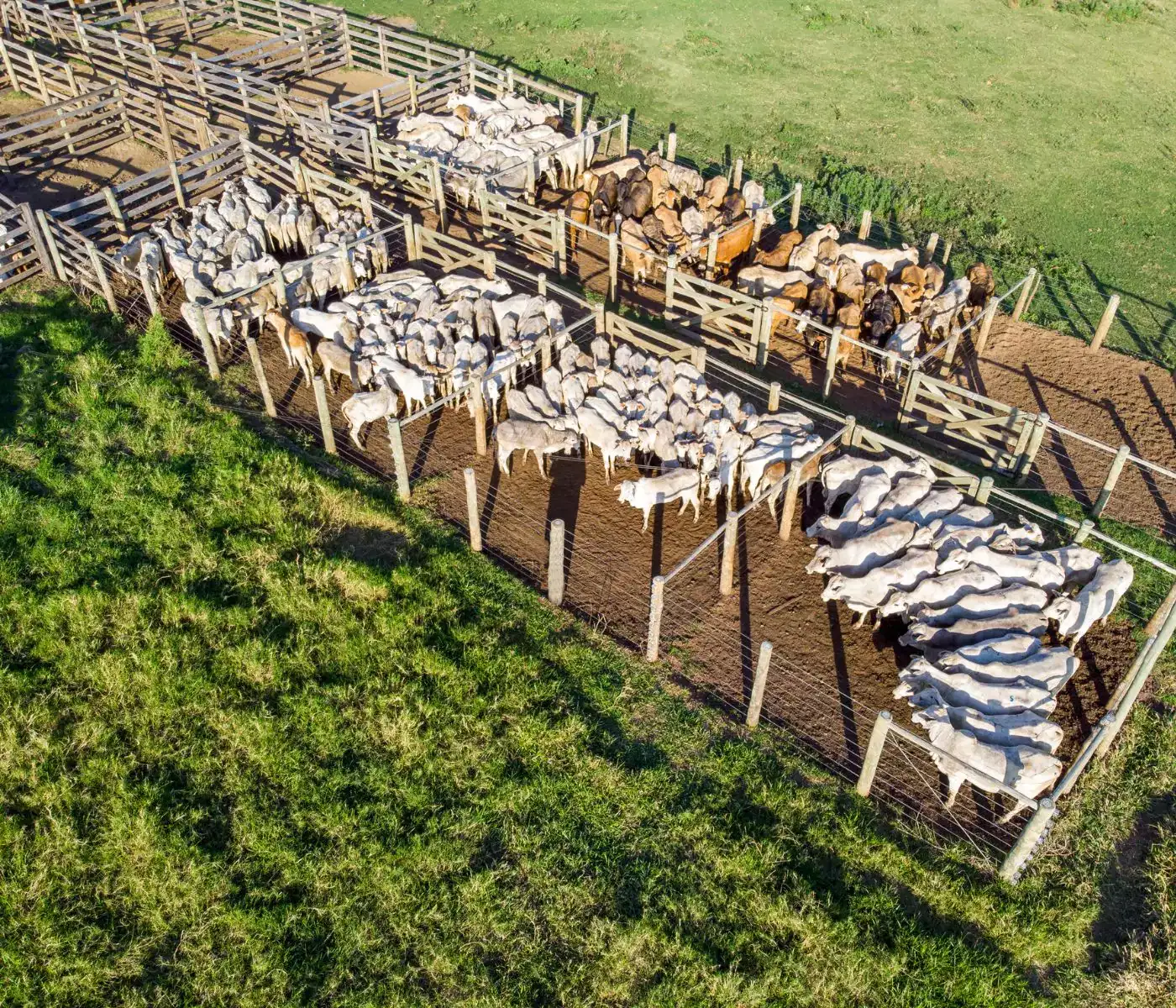
With a daily drone flight, you follow the weight of every pen without pulling cattle off the bunk or holding up feeding.
Pen 7
today's flight, 07:12
493 kg
average live weight per head
Example screen. Illustrative figures.
What changes when you follow the gain
Without weighing mid-cycle, a drop in gain only shows at shipping. With the weight updated every day, the drop shows in the week it happens, in time to fix it, and the slowdown at the end of the cycle shows when days on feed start to cost.
Unseen drop
390 kg
Measured by Brete
390 kg
Difference
—
Average live weight per head, kg
Week on feed
*Example curve: a Nelore pen, 140 head, arriving at 390 kg. Illustrative figures, not a guaranteed result.
Weeks 1 and 2
Settling in at the bunk
In the first week the pen gains below plan, as expected when cattle arrive at the bunk. By the second it keeps pace with the plan.
Weeks 3 and 4
The ration-switch drop
On the switch to the finishing ration, gain fell to 0.7 to 0.8 kg a day, almost 38% below plan. With a daily flight, the drop shows the same week.
Weeks 5 to 12
Steady gain
After the change to management or the ration, made the very next week, the pen gains about 1.6 kg a day.
Weeks 13 and 14
The gain slows
In week 13 gain fell to 1.2 kg a day, and in week 14 to 1.0. This is where days on feed start to cost, and the call to ship is yours, with the week's number in hand.
When to ship the pen is still your call, because it depends on the cattle price and your cost per head per day. Brete gives you the day's weight and the week's gain, always with the flight and the date they come from.
Pen by pen, without the chute
In a few minutes the drone flies over every pen and counts the head in each one. Every reading starts from that count.
24 kg
less a head if the drop had gone unseen for 4 weeks
In the example, the drop on the ration switch was seen the week it happened and fixed the next. Had it run 4 more weeks with nobody seeing it, the 140-head pen would have shipped 24 kg a head lighter.
A count every day
Arrivals, departures and missing head in every pen are recorded on the day's flight.
Weight every day, gain every week
The weight updates with every flight, and the average daily gain is closed once a week, long enough to show the trend clearly.
Feeding never stops
The scale is still the reference at shipping. Brete adds frequency: the weight of every pen, updated daily, from arrival to exit.
Yardage
Feed, labour and facilities cost money every day. Seeing the gain slow down in the week it happens tells you when a day in the pen stops paying for itself.
No handling
Weighing mid-cycle means pulling cattle off the bunk, running them through the chute and back to the pen. With the flight, the pen stays where it is.
Ration changes
The effect of a change in the formulation shows on the pen's curve within a week or two, without waiting for slaughter.
Planning shipping
With every pen's weight in hand, you schedule with the packer on the day's number.
How it works
- 01
The drone arrives and we train your team
We send the equipment and train the people who will fly it at your feedlot.
- 02
The drone flies over the pens every day
The flight takes a few minutes, at a time that doesn't get in the way of feeding.
- 03
Every pen's weight on your phone
The app shows the head count, the week's gain, the days on feed and the curve since arrival.
Pricing
We quote each feedlot directly. Tell us how many head you feed and where, and we'll come back with a price.
Ask for a quoteStart with your first pen
Get in touch to book the first flight at your feedlot, with no commitment.
Talk to us